
Loan Rates: Don’t Miss the Crucial September 30 Deadline
Discover how setting up automatic payments by the September 30 deadline can help reduce interest rates on qualifying federal student loans.
Loan Interest Too High? Steps to Take Before September 30
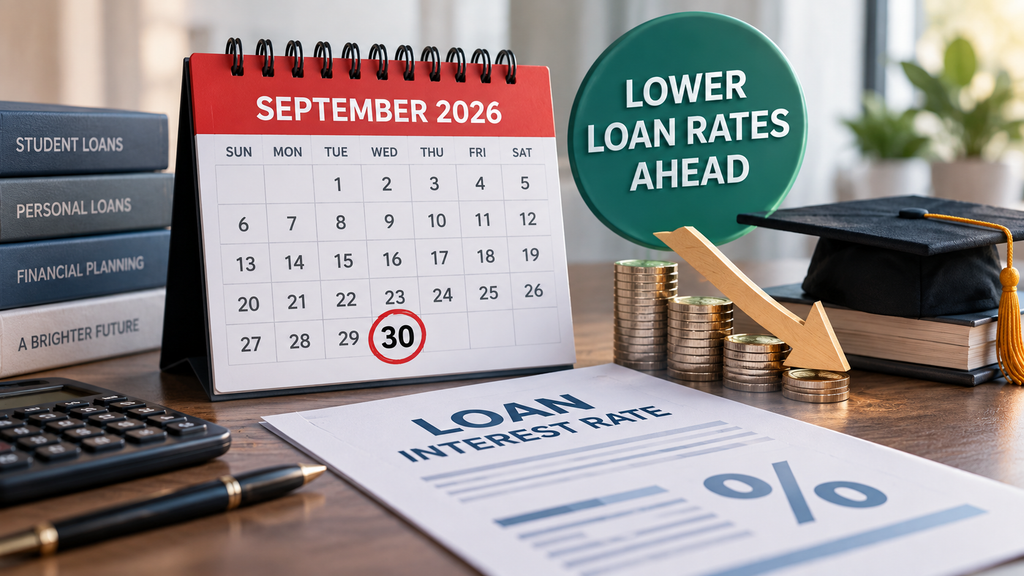
September 30, 2026, marks a crucial cutoff date for federal student loan borrowers who qualify.
By enrolling in automatic payments by 11:59 p.m. on that day, you could be eligible for a temporary 1% interest rate reduction on your loan that lasts through June 30, 2028, according to the U.S. Department of Education.
This deadline does not affect all loans. It specifically concerns eligible federal student loans and the Auto Pay interest rate discount.
If you want to reduce your borrowing expenses, here’s what the September 30 deadline involves, who qualifies, how the rate cut works, and what you need to verify before the deadline.
What Exactly Is the September 30 Loan Interest Rate Deadline?
September 30 marks the final day for qualified federal student loan borrowers to sign up for Auto Pay and benefit from a temporary 1% reduction in their interest rate.
Starting July 1, 2026, the U.S. Department of Education boosted the Auto Pay interest-rate discount from 0.25% to a full 1%.
Borrowers who qualify and sign up by September 30 will enjoy this temporary rate cut until June 30, 2028.
Why Is the September 30 Deadline So Important?
Reducing your loan interest rate can lower the total interest that builds up on your outstanding student loan balance.
How much this matters will vary based on your loan balance, repayment plan, and how much time you have left to pay it off.
For instance, someone owing $30,000 could save roughly $300 in interest annually by dropping their rate from 7% to 6%, before factoring in any principal payments.
Keep in mind, this example is just an estimate and doesn’t guarantee what an individual would actually save.
Does the September 30 Deadline Apply to Every Loan?
No. This is a key distinction that you need to know.
The September 30 deadline doesn’t require refinancing personal loans, mortgages, auto loans, or private student loans by that date.
The 1 percentage-point temporary rate cut applies only to eligible federal student loans with Auto Pay enrollment.
Who Is Eligible for the 1% Interest Rate Reduction?
Federal student loan borrowers who sign up for Auto Pay by September 30, 2026, are eligible for the temporary 1% interest rate reduction.
The Department of Education states that the enhanced interest rate reduction applies to qualifying Direct Loans issued on or after July 1, 2012.
You should verify your specific eligibility by contacting your loan servicer.
What If You’re Already Signed Up for Auto Pay?
If you’re currently enrolled in Auto Pay, you typically don’t have to sign up again.
The updated program raises the total Auto Pay discount to 1 percentage point, so those who had a 0.25% reduction before can now benefit from an extra 0.75% reduction.
Review your servicer account to verify how the discount is applied to each of your loans.
The Importance of Loan Interest Rates for Borrowers in 2026
The cost of borrowing continues to be a crucial financial concern for many U.S. households.
On September 16, 2026, the Federal Reserve increased the federal funds target range by 0.25 percentage points to 3.75%–4%.
In addition, the Federal Reserve Bank of New York announced that total U.S. household debt climbed to $18.8 trillion in the second quarter of 2026.
These numbers don’t directly set the interest rate for any single borrower. Various loans have their own pricing formulas.
Still, they help explain why many people stay focused on how much borrowing costs can fluctuate.
How Does the Federal Funds Rate Affect My Loan?
The federal funds rate isn’t the actual interest charged on your personal or student loan.
It’s the rate banks use when they lend reserve funds to each other overnight.
Monetary policy shifts can affect overall financial markets, but how much an individual loan is impacted depends on the loan type and the way its interest rate is set.
This difference matters a lot when you see news about loan rates “dropping” or “increasing.”
Loan Interest Rate vs. APR: What’s the Difference?
The interest rate is the percentage charged on the loan amount, whereas APR offers a more comprehensive view by including certain fees to show the yearly cost of borrowing.
When comparing personal loans, APR is especially helpful because two loans with the same interest rate might have differing fees, affecting the total cost.
Why This Is Important When Comparing Personal Loan Offers
NerdWallet found that personal loan APRs typically range between 6% and 36%, varying widely by lender and borrower profile.
Their September 2026 data also revealed notable differences in average prequalified APRs based on different credit scores.
This indicates that the APR another borrower gets may not match the rate you qualify for.
How to Verify Your Loan Interest Rate Ahead of the September 30 Deadline
The quickest way to see if this deadline affects you is by reviewing your federal student loan account and your Auto Pay enrollment.
Take these steps:
Step 1: Review Your Current Loan Interest Rate
Sign in to the account for your federal student loan servicer.
Note the interest rate currently applied to each loan.
Step 2: Confirm Your Auto Pay Status
Navigate to the payment settings area and check if Auto Pay is currently turned on.
If you haven’t signed up yet, follow the enrollment steps provided by your loan servicer.
Step 3: Confirm Your Interest Rate Discount
Check for details indicating if the Auto Pay discount is being applied to your loan.
If you don’t see this information, reach out directly to your loan servicer.
Step 4: Verify Your Bank Account Details
Ensure the bank account linked to Auto Pay is active and has enough funds to cover scheduled payments.
Step 5: Keep a Copy of Your Confirmation
Once enrolled, save your confirmation email or any proof of enrollment for your records.
Keeping this confirmation can be helpful if you need to address any issues with your account later on.
Is the September 30 Deadline Relevant for Personal Loans?
No, personal loan borrowers don’t automatically qualify for a 1% interest rate cut by September 30.
If your personal loan has a high interest rate, there may be other strategies to lower your costs.
Some possible choices include:
- Evaluating different refinancing options
- Consulting your current lender about lower rates
- Boosting your credit score before applying
- Comparing loans by their APR values
- Shortening the loan term if it fits your budget
Still, when considering refinancing, focus on the overall loan cost—not only the stated interest rate.
What Are the Consequences of Missing the September 30 Deadline?
Failing to meet this deadline doesn’t mean you lose all chances to reduce your borrowing expenses.
But you might forfeit the chance to benefit from the temporary boosted Auto Pay discount available only through the September 30 enrollment period.
What happens if you miss the deadline:
- Review your federal student loan account.
- Reach out to your loan servicer about benefits.
- Explore repayment plan alternatives.
- Assess other debts with high interest rates.
- If you have personal loans, separately consider refinancing options.
It’s important to separate this federal student loan benefit from general chances to refinance or negotiate other types of debt.
Borrower’s Financial Checklist for September 2026
September is a great time to evaluate your borrowing expenses.
The Bureau of Labor Statistics has planned several key economic reports this month, including the August jobs report on September 4, the Consumer Price Index for August on September 11, and JOLTS data released on September 29.
While these reports won’t directly set your personal loan interest rate, they offer insight into the overall economic environment.
Review Your Debts
Make a straightforward list that includes:
- Loan balance
- Loan interest rate
- APR
- Monthly payment
- Remaining term
- Potential fees
Spot Where Your Costs Might Be Highest
Start by focusing on debts that have the steepest interest rates.
Credit cards and certain personal loans often come with much higher interest rates compared to other types of consumer credit.
Look Into Possible Discounts
Check if your lender or loan servicer provides any perks related to:
- Enrollment in Auto Pay;
- Existing client relationships;
- Designated repayment plans;
- Other qualifying factors.
Make sure to confirm the details directly with your loan provider.
Author’s Perspective
Understanding the September 30 deadline is important because it marks a clear, specific chance for eligible federal student loan borrowers—not a universal cutoff affecting all loans nationwide.
For those who qualify, reviewing Auto Pay status before the deadline ensures they know if they’re benefiting from the offered interest rate discount.
For everyone else, the takeaway is simple: don’t base your borrowing choices just on headlines about loan interest rates.
When weighing debt options, consider the loan interest rate, APR, fees, monthly payments, repayment period, and overall cost together.
This approach gives you a more accurate understanding of what the loan truly costs and whether switching makes financial sense for you.

Recommended Content
Why your card’s annual fee keeps climbing
Learn what drives increases and how to calculate whether your card is still worth it.
Continue reading * You will remain on the current website